 Donate
Pashupatinath Temple Guide: Entry, Aarti & Visitor Tips
On This Page
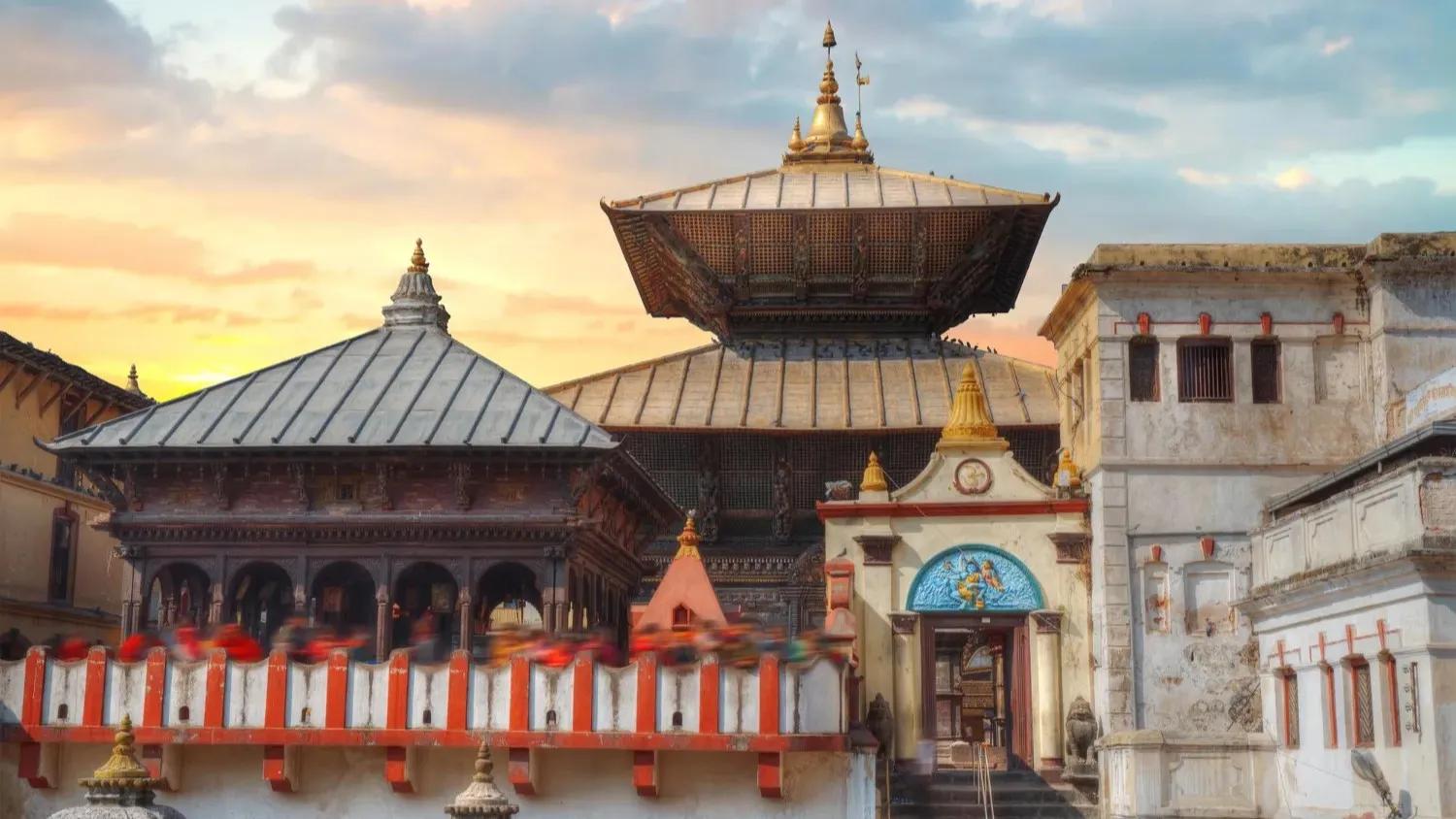
Pashupatinath Temple is one of Nepal’s most sacred Hindu temples. It is dedicated to Lord Shiva as Pashupati, the Lord of all living beings. Located in Gaushala, Kathmandu, the temple is a living place of worship, darshan, cremation rituals, evening aarti, festivals, and Hindu tradition.
This guide explains the main things to know before visiting Pashupatinath Temple. You will learn why the temple matters, who can enter, what you can see, when to visit, what to wear, and how to behave respectfully.
Many visitors ask simple questions before going: Can foreigners enter Pashupatinath? What time is the aarti? Is photography allowed? What is Arya Ghat? This guide answers those questions clearly, so you can visit with more confidence and respect.
Quick Answer: Pashupatinath Temple is a sacred Hindu temple in Kathmandu dedicated to Lord Shiva. The main sanctum is generally open only to Hindus, while non-Hindu visitors can observe the wider temple area, ghats, and evening aarti from permitted places. The temple is famous for Arya Ghat, cremation rituals, Maha Shivaratri, sadhus, ancient Shiva legends, and its UNESCO heritage value.
Pashupatinath Temple at a Glance
| Detail | Information |
|---|---|
| Location | Gaushala, Kathmandu, Nepal |
| Distance from Thamel | Around 5 km, depending on route and traffic |
| Main deity | Lord Shiva as Pashupati |
| Also known as | Pashupatinath Mandir, Shree Pashupatinath Temple, Pashupati Temple |
| Main temple entry | Hindus only |
| Non-Hindu visitors | Can observe from permitted outer areas |
| Opening hours | Wider area generally listed from 4:00 AM to 9:00 PM |
| Inner temple access | May pause around midday or change during rituals and festivals |
| Aarti timing | Temple aarti schedules may vary; the riverside Bagmati Sandhya Aarti is commonly observed around 6:00 PM |
| Entry fee | NPR 1,000 for foreign nationals, based on current visitor information; fees may change |
| Famous for | Arya Ghat, cremation rituals, aarti, Maha Shivaratri, sadhus, and Shiva worship |
| Nearby place | Boudhanath Stupa |
Pashupatinath is close to Tribhuvan International Airport and not far from Boudhanath Stupa. Most visitors reach the area by taxi or local transport, then walk a short distance to the entrance. From Thamel, the taxi ride usually takes around 15–25 minutes, depending on traffic.
The Pashupati area is managed by the Pashupati Area Development Trust, known as PADT. It looks after temple services, visitor notices, festival arrangements, conservation, and management of the sacred area.
Temple hours, aarti timing, entry rules, festival access, and photography rules may change during festivals, special pujas, or official arrangements. Always check the latest notice at the entrance or ask temple staff before visiting.
Why Pashupatinath Temple Matters
Pashupatinath Temple matters because it is one of Nepal’s holiest Hindu temples and a major Lord Shiva pilgrimage site. It is also an active place for prayer, darshan, final rites, festivals, and daily worship.
Some temples are famous because they are old. Some are famous because they are beautiful. Pashupatinath feels different because it is still deeply alive.
People come here to pray, ask for blessings, perform rituals, mourn loved ones, and feel close to Lord Shiva. For first-time visitors, the temple can feel peaceful, intense, confusing, and emotional at the same time.
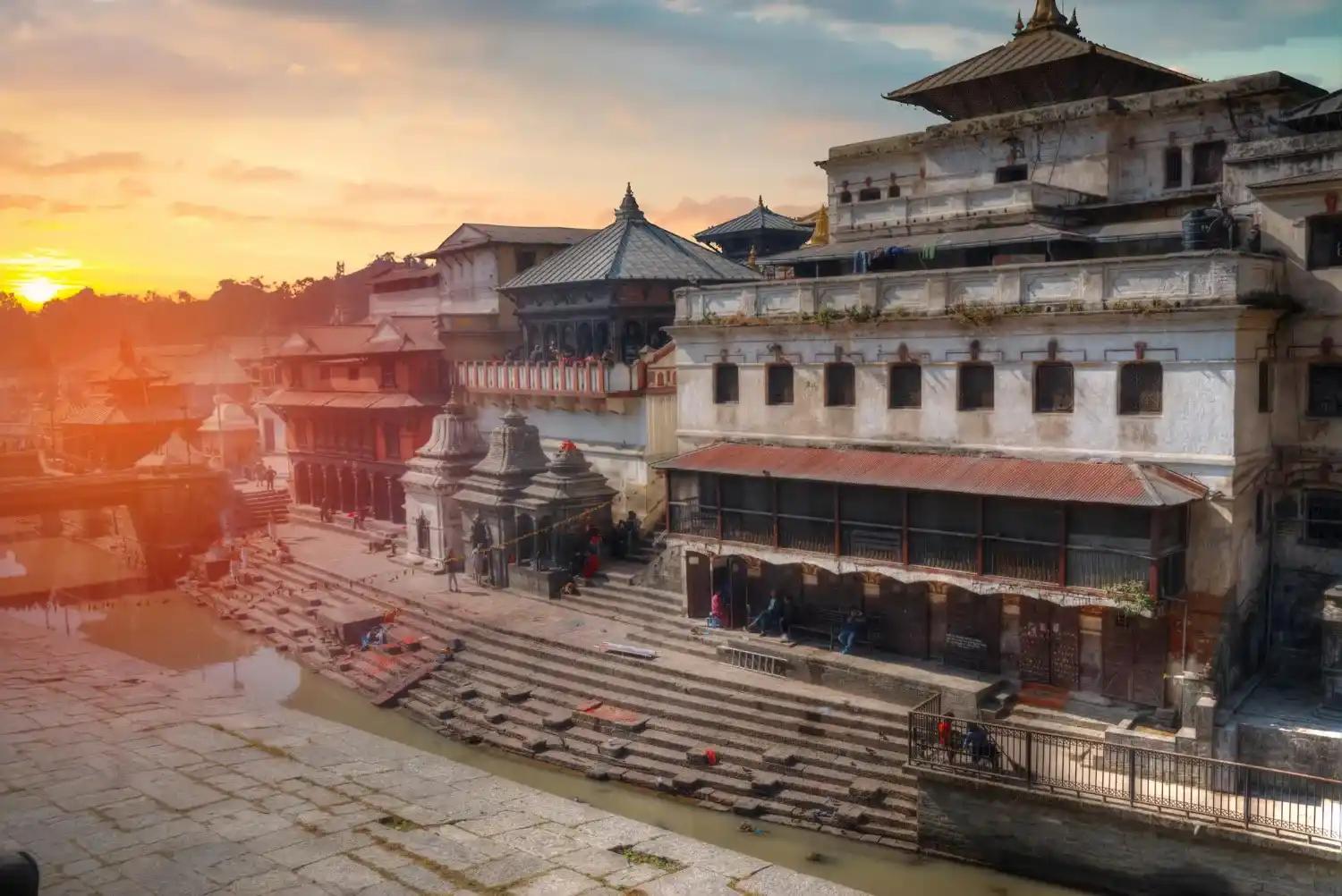
You may hear bells, mantras, temple music, and family prayers. You may see devotees waiting for darshan, sadhus sitting near shrines, and rituals taking place near Arya Ghat.
Pashupatinath is also part of the UNESCO-listed Kathmandu Valley World Heritage property. It is one of the seven monument zones, along with Hanuman Dhoka Durbar Square, Patan Durbar Square, Bhaktapur Durbar Square, Swayambhu, Boudhanath (also spelled Bauddhanath in some heritage references), and Changu Narayan.
Together, these heritage sites show Nepal’s deep cultural identity through Hindu temples, Buddhist stupas, palace squares, Newar art, traditional architecture, sacred rituals, and festivals. Pashupatinath adds the spiritual side of this heritage through Lord Shiva worship, cremation ghats, aarti, and centuries of devotion.
So this guide is not only about what to see. It is also about how to understand the place with respect.
Pashupatinath Story and History
The origin of Pashupatinath is surrounded by sacred stories, not only written history.
According to popular Hindu tradition, Lord Shiva and Goddess Parvati once came to the forest near the Bagmati River and took the form of deer. Shiva loved the peaceful forest so much that he stayed there. When the gods searched for him and tried to bring him back, one of his horns broke. That broken horn was later worshipped as a Shiva linga.
Another local story says the sacred linga was later hidden or buried. A cowherd noticed that one of his cows was releasing milk on the same spot every day. When people dug there, they discovered the divine linga of Pashupatinath.
These stories are part of Hindu belief and local tradition. They should not be read as confirmed historical records. But they show why many devotees believe the place was sacred before the temple structure existed.
Historically, Pashupatinath developed through worship, royal support, rebuilding, priestly traditions, and centuries of devotion. Different chronicles and traditions connect the temple with early Kathmandu rulers and later Malla-period patronage.
Because older temple history comes from legends, chronicles, and religious tradition, exact dates and names can vary by source. That is why Pashupatinath does not feel like one isolated monument. It feels like a layered spiritual landscape.
A shrine here. A ghat there. A priest chanting. A family praying. A sadhu sitting quietly.
Pashupatinath carries many centuries in one place.
What to See at Pashupatinath
Your first visit can feel a little overwhelming, so it helps to know what may appear in front of you.
Main Temple Area
The main temple is the spiritual center of Pashupatinath. Hindu devotees come here for darshan and puja. Non-Hindus can usually observe the wider temple atmosphere from permitted places.
Arya Ghat
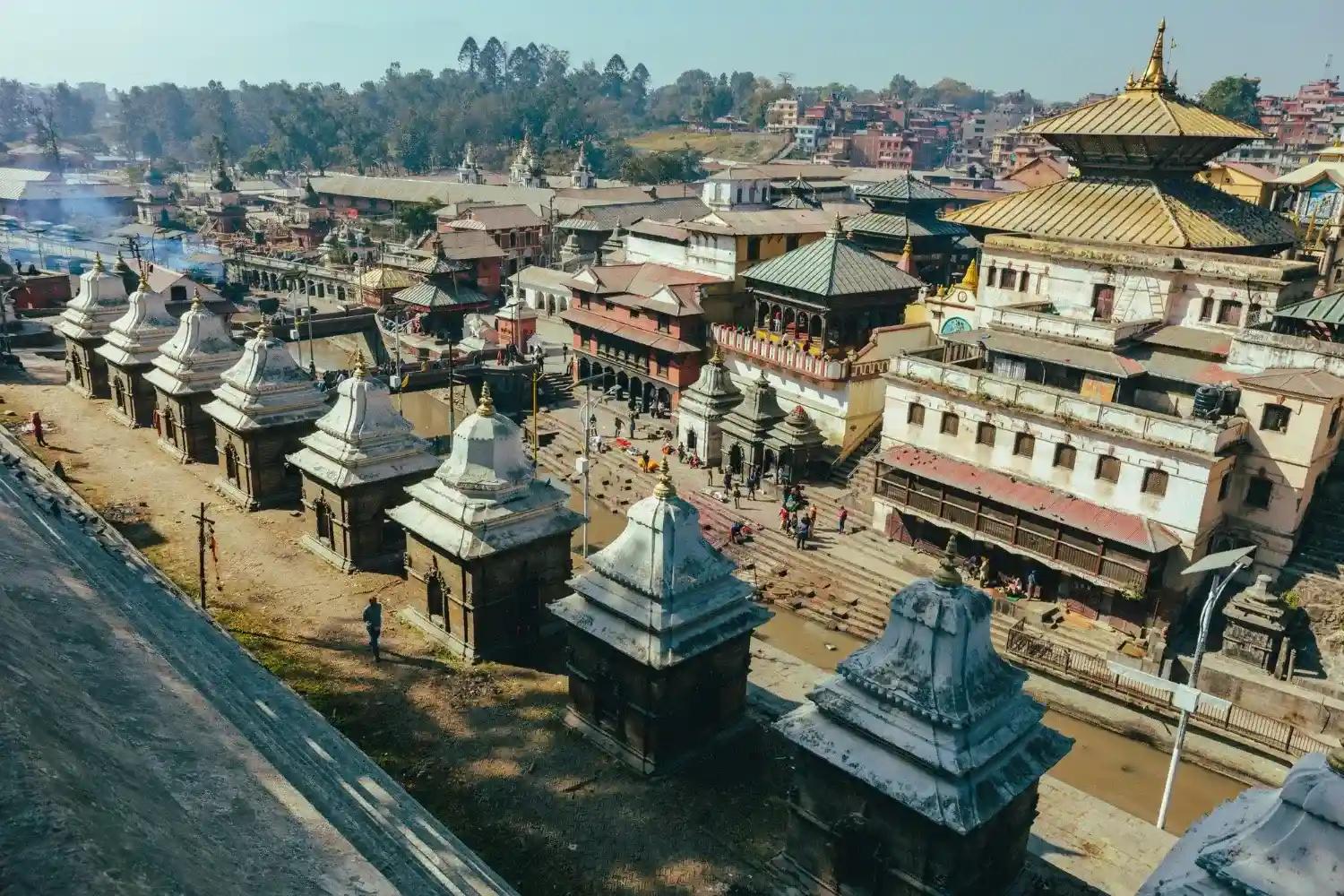
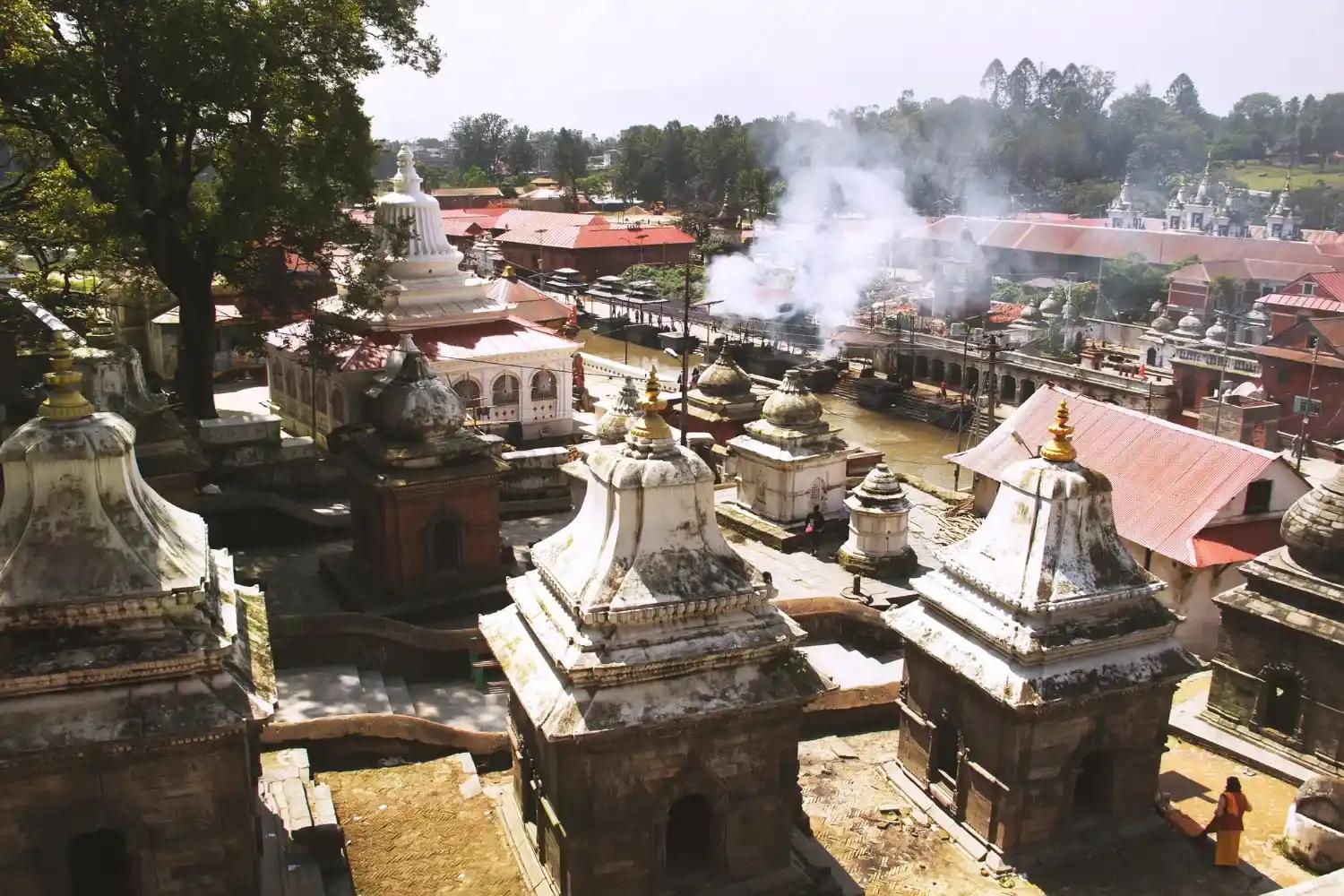
Arya Ghat is one of the most sacred cremation areas at Pashupatinath. Hindu final rites are performed here, and visitors may see families saying goodbye to loved ones. This part of the visit needs silence, distance, and sensitivity.
Other Ghats and Ritual Spaces
Other ghats around Pashupatinath are also used for cremation, offerings, and post-death rituals. These are active places of prayer, grief, and family duty.
Evening Aarti Area
The evening aarti area becomes lively with lamps, chants, bells, and devotees. Even if you do not understand every chant, the sound, light, and atmosphere can stay with you.
Sadhus and Smaller Shrines
You may see sadhus near shrines and open spaces. Some may interact with visitors, while others prefer privacy. Always ask before taking photos. If you take a posed photo, it is polite to offer a small donation.
Guhyeshwari Temple
Guhyeshwari Temple is close to Pashupatinath and is an important sacred site in Nepal. Many pilgrims visit both places together.
For a deeper list of visitor experiences, see Things to Do at Pashupatinath Temple.
Arya Ghat and Visitor Respect
Arya Ghat is one of the main cremation ghats at Pashupatinath, where Hindu final rites are performed.
For Hindu families, final rites are not only a farewell. They are part of a spiritual process. Many believe that rituals performed near Pashupatinath carry deep religious meaning for the departed soul.
After cremation, many families observe a 13-day ritual period. During this time, close family members may follow mourning practices, offer prayers, perform purification rites, and complete ceremonies guided by priests.
This tradition can vary by family and community, so it should not be explained as exactly the same for everyone.
For visitors, the rule is simple: if you see grief, give space. Do not stare. Do not film. Do not zoom in. Either observe quietly from a respectful distance or walk away.
Visitor Rules: Entry, Fee, Dress Code and Photography
Foreigners can visit the wider Pashupatinath area, but non-Hindus are generally not allowed inside the main temple sanctum.
Non-Hindu visitors can observe the temple area, ghats, aarti, and surrounding spaces from permitted viewpoints. This rule may feel unusual if you are not familiar with Hindu temple traditions, but it is part of the temple’s religious boundary.
Foreign visitors may need to pay an entry fee to enter the permitted visitor areas. Nepal Tourism Board currently lists the Pashupatinath Temple entry fee as NPR 1,000 per day per entry for foreign visitors, with Indian nationals listed as free. Fees and access rules may change, so check the latest notice at the entrance counter before visiting.
Wear modest clothing. Cover your shoulders and knees. Avoid shorts, sleeveless tops, tank tops, and revealing outfits. Remove shoes where required, and follow signs or instructions from temple staff.
Photography rules can vary by exact area. Photography is not allowed inside the main sanctum or during religious ceremonies. Photos may be allowed only in some exterior or public areas, but you should follow signs, guards, and temple staff instructions.
Do not photograph cremation rituals closely. Do not take pictures of grieving families. Do not photograph sadhus, priests, or devotees without asking.
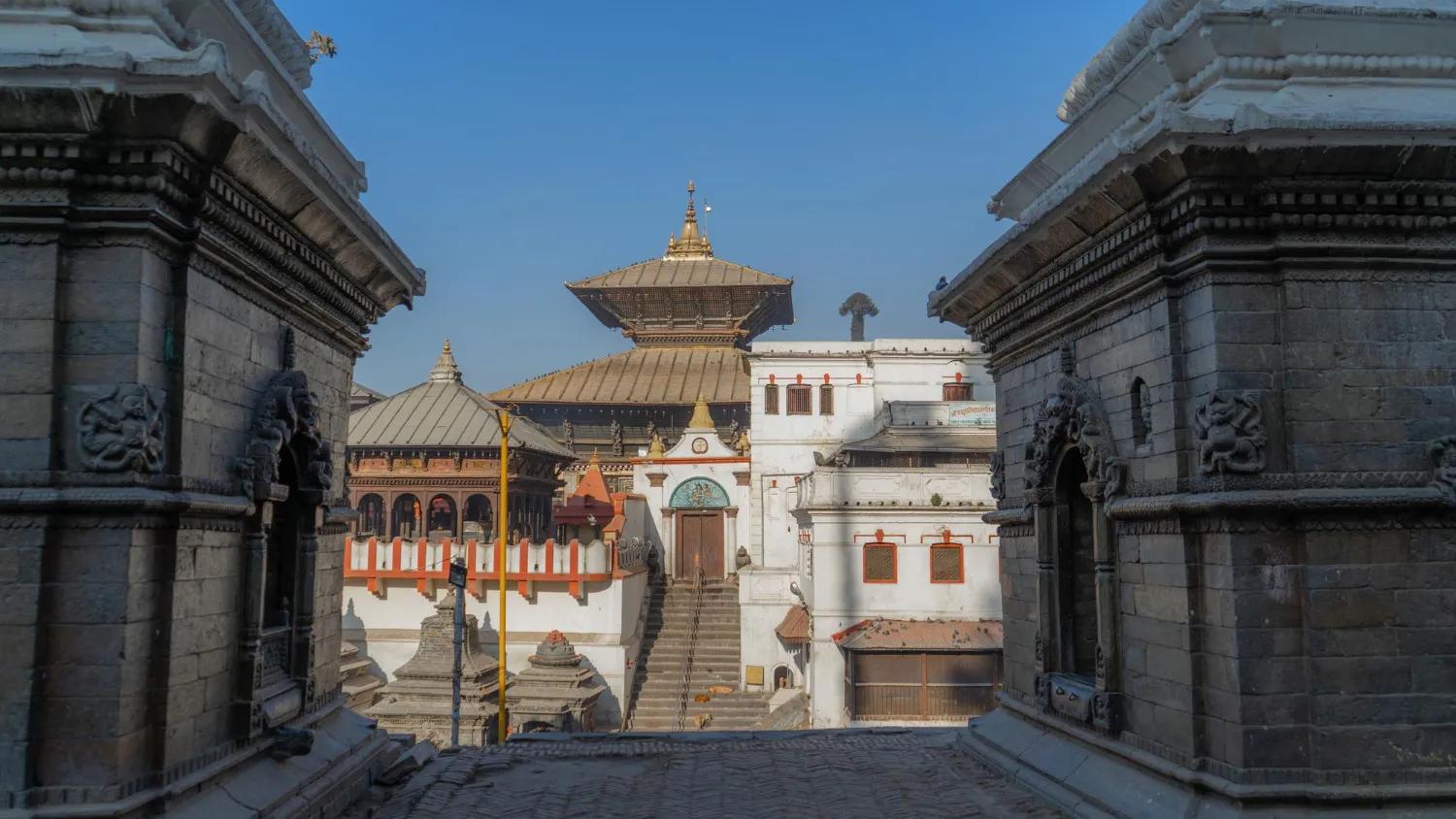
Things to avoid at Pashupatinath
- Do not try to enter restricted temple areas.
- Do not photograph the main sanctum.
- Do not take close photos of cremation rituals.
- Do not disturb worshippers, priests, or mourning families.
- Do not treat sadhus as photo props.
- Do not wear shorts, sleeveless tops, or revealing clothes.
- Do not smoke or behave casually near ritual areas.
- Do not push through the crowd during aarti.
- Do not ignore signs, guards, or temple staff instructions.
A respectful visitor will always understand more.
Best Time to Visit and Evening Aarti
The best time to visit Pashupatinath depends on what you want to experience.
| Time | Best For |
|---|---|
| Early morning | Peaceful atmosphere and devotion |
| Late afternoon | Softer light and slower movement |
| Evening | Bagmati Sandhya Aarti atmosphere |
| Maha Shivaratri | Major religious gathering, but very crowded |
| Teej and Ekadashi | Strong devotional atmosphere |
For festival crowd planning, see Festivals and Sacred Celebrations.
The wider Pashupati area is generally listed as open from 4:00 AM to 9:00 PM. Inner temple access, darshan timing, puja schedules, and aarti timing may change during festivals, special pujas, or official arrangements.
There are two timing details visitors should understand. PADT may list temple worship schedules such as Morning Puja, Mahabhishek, Evening Aarti, and Night Aarti. Separately, the riverside Bagmati Sandhya Aarti, which most visitors come to watch near the Bagmati River, is commonly described as starting around 6:00 PM. Timings can still change during festivals, special pujas, weather, crowd control, or official arrangements.
For most visitors, arriving around 5:30 PM is a safer plan. It gives you time to find a respectful viewing place before the crowd grows.
Even if you do not understand every chant, the evening aarti can stay with you. The lamps move in rhythm. Bells ring. Devotional music fills the space. People sit, watch, pray, record, or simply stay quiet for a few minutes.
Try not to experience it only through your phone screen. Watch a little with your own eyes. Stand where you are not blocking anyone.
Aarti is prayer first, content second.
Nearby Places and Half-Day Plan
If you are already in this part of Kathmandu, a few important places are nearby.
Guhyeshwari Temple is a sacred Hindu temple near Pashupatinath and is strongly connected with Shakti worship.
Boudhanath Stupa is one of Kathmandu’s most important Buddhist sites. It is close to Pashupatinath and works well for a half-day route.
Swayambhu, also called the Monkey Temple, gives wide views of Kathmandu and is one of the UNESCO-listed monument zones.
Kathmandu Durbar Square is a historic palace square with temples, courtyards, and traditional Newar architecture.
If this is your first visit, keep the plan simple.
Morning Route
Start early at Pashupatinath. Walk around the permitted areas, observe Arya Ghat and the surrounding ghats respectfully, and spend a quiet moment near the temple surroundings. Then continue to Guhyeshwari Temple and Boudhanath Stupa.
Evening Route
Arrive in the late afternoon. Explore the outer areas first. Then stay for the evening aarti. After that, take a short taxi ride to Boudhanath Stupa for a calm evening walk or dinner nearby.
This route gives you both Hindu and Buddhist heritage in one short Kathmandu experience.
Tips Before You Go
A good visit to Pashupatinath is not about seeing everything. It is about understanding what you are seeing.
Before you go:
- Dress modestly.
- Carry small cash.
- Keep valuables safe.
- Visit early for a calmer experience.
- Arrive around 5:30 PM if you want to watch evening aarti.
- Avoid close photos of cremation rituals.
- Ask before taking photos of people.
- Check updates during major festivals.
- Hire a local guide if you want cultural explanation.
- Be patient with crowds, queues, and temple rules.
Pashupatinath rewards slow visitors.
FAQs About Pashupatinath Temple
Where is Pashupatinath Temple located?
Pashupatinath Temple is located in Gaushala, Kathmandu, Nepal, on the banks of the Bagmati River. It is around 5 km from Thamel and close to Tribhuvan International Airport.
Is Pashupatinath Temple a UNESCO World Heritage Site?
Yes. Pashupatinath is one of the seven monument zones of the UNESCO-listed Kathmandu Valley World Heritage property.
Why is Pashupatinath Temple famous?
Pashupatinath is famous as one of Nepal’s most sacred Hindu temples dedicated to Lord Shiva. It is also known for Arya Ghat, cremation rituals, evening aarti, Maha Shivaratri, sadhus, and its heritage value.
Who is Pashupatinath Temple dedicated to?
Pashupatinath Temple is dedicated to Lord Shiva in the form of Pashupati, meaning Lord of all living beings.
What is the ancient story of Pashupatinath Temple?
One popular tradition says Lord Shiva and Goddess Parvati came to the Bagmati forest in the form of deer. Another story says a cowherd discovered the sacred Shiva linga after seeing a cow release milk on the same spot. These stories are part of Hindu belief and local tradition.
Can foreigners visit Pashupatinath Temple?
Yes, foreigners can visit the wider Pashupatinath area. Non-Hindus are generally not allowed inside the main sanctum, but they can observe from permitted areas.
What is Arya Ghat at Pashupatinath?
Arya Ghat is one of the main cremation ghats at Pashupatinath. Hindu final rites are performed there, so visitors should observe quietly and respectfully.
What time is the evening aarti at Pashupatinath Temple?
The riverside Bagmati Sandhya Aarti is commonly described as starting around 6:00 PM. PADT may also list broader temple aarti schedules, such as Evening Aarti and Night Aarti. Because temple schedules and riverside ritual timing can vary during festivals, special pujas, or official arrangements, arrive early and confirm locally.
What are the opening hours of Pashupatinath Temple?
The wider Pashupati area is generally listed as open from 4:00 AM to 9:00 PM. Inner temple access, darshan timing, and ritual schedules may change during festivals, special pujas, or official arrangements.
What should I wear to Pashupatinath Temple?
Wear modest clothes that cover your shoulders and knees. Avoid shorts, sleeveless tops, tank tops, and revealing outfits. Remove shoes where required.
Is photography allowed at Pashupatinath Temple?
Photography is not allowed inside the main sanctum or during religious ceremonies. Photos may be allowed only in some exterior or public areas. Always follow signs and temple staff instructions.
Is there an entry fee for Pashupatinath Temple?
Nepal Tourism Board currently lists the Pashupatinath Temple entry fee as NPR 1,000 per day per entry for foreign visitors, with Indian nationals listed as free. Fees and access rules may change, so check the latest notice at the entrance counter.
How much time should I spend at Pashupatinath Temple?
Most visitors need around 1 to 2 hours. If you want to watch the evening aarti, arrive in the late afternoon and allow extra time for crowds.
Do I need a guide to visit Pashupatinath Temple?
No, a guide is not required. But a local guide can help first-time visitors understand darshan, cremation ghats, aarti, entry rules, and respectful behavior inside the wider Pashupati area.
Final Thoughts
Pashupatinath is not the kind of place you simply tick off from a Kathmandu sightseeing list.
It asks you to slow down. To watch with respect. To understand that every bell, flame, prayer, and ritual means something to someone.
You may come for history, photography, culture, or curiosity. But if you stay quiet for a moment near the sacred area, you may leave with a deeper understanding of the place.
Pashupatinath Temple is not just a place to see in Kathmandu. It is a place to feel, respect, and understand.